

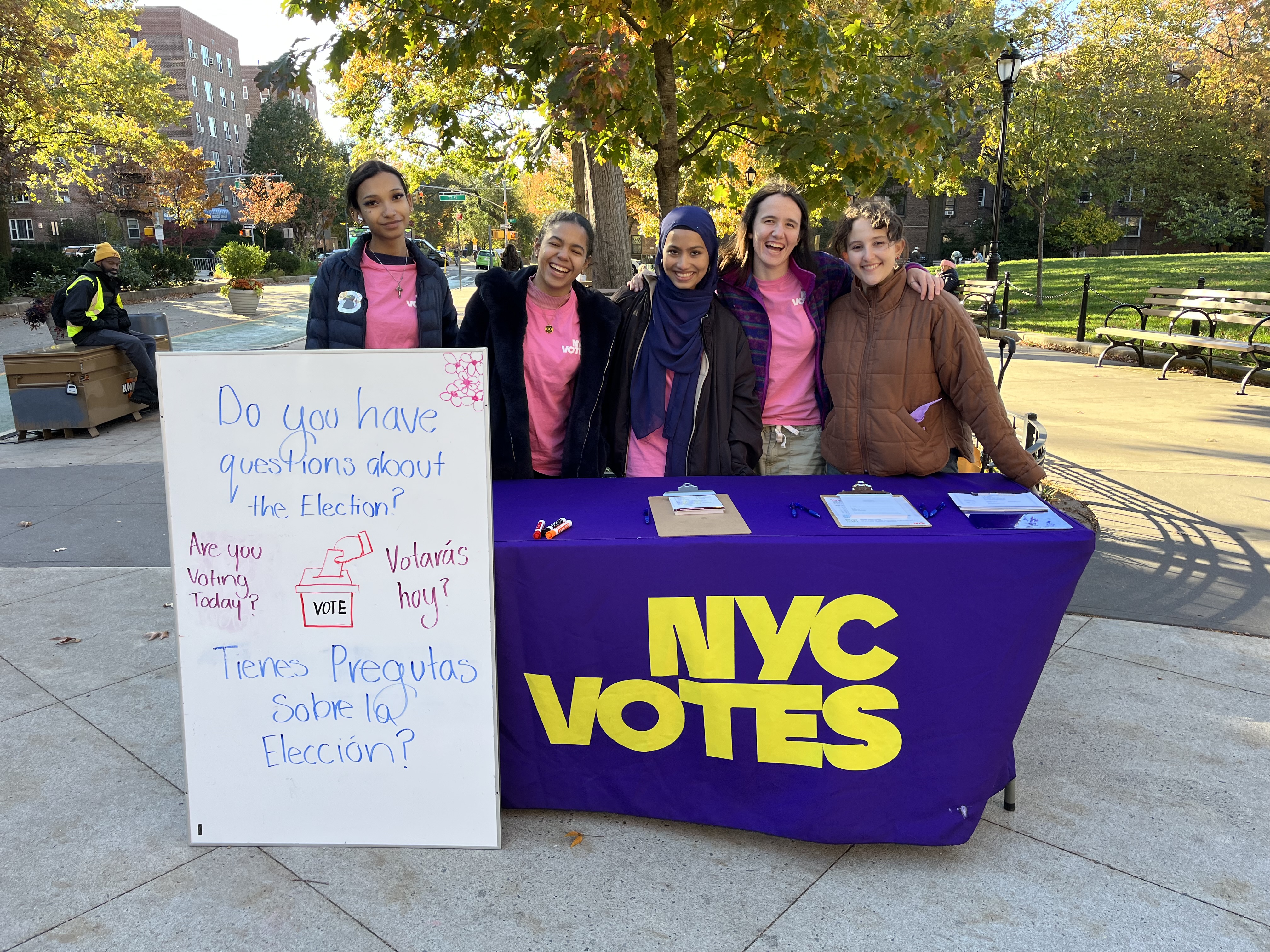
Jèn Anbasadè NYC 2025 yo nan Jounen Eleksyon Jeneral nan Jackson Heights.
20 fevriye 2026


Lè Zara Imtiaz te patisipe nan yon fòmasyon sou Semèn Edikasyon Sivik an Fevriye 2023, li pa t prevwa patisipe nan Pwogram Youth Ambassadors NYC Votes la. Li te yon elèv lekòl segondè nan Queens, li te fouyapòt men li pa t konnen ki plas angajman sivik ta pral okipe nan lavi l.
Apresa, li te wè chif bidjè vil la.
“Lè mwen te aprann bidjè Vil New York plis pase 100 milya dola, sa te choke m anpil," se sa Imtiaz deklare. "Sa te fè m reyalize kantite pouvwa ki egziste onivo lokal — epi jan jèn moun yo pa twò reflechi sou sa.”
Reyalizasyon sa a te fè l aplike nan pwogram nan.
Jounen jodi a, Imtiaz se yon etidyan dezyèm ane nan The City College of New York, kote l ap etidye jeni sivil, epi li okipe pòs Estajyè nan Angajman Kominotè ak Edikasyon nan NYC Votes. Men li te kòmanse pakou li antanke Jèn Anbasadè nan lane 2023, lè li te suiv pwogram konplè a soti nan prentan rive nan otòn.

Jèn Anbasadè 2025 yo ak pèsonèl NYC Votes la bwè krèm an deyò Bibliyotèk Piblik Brooklyn nan.
“Mwen te timid anpil lè m te nan lekòl segondè,” se sa li deklare. “M pa t janm imajine mwen ap apwoche etranje pou m pale yo de zafè vote . Men, apre fòmasyon sa a, mwen yon tijan vin renmen travay la."
Li pa sèl moun ki gen santiman sa a.
Mariama Touray, ki se yon Jèn Anbasadè ane 2023 epi aktyèl manm Komite Ansyen Elèv yo, di li te aplike konsa apre l te fin jwenn opòtinite a sou paj Google Classroom pwofesè li a.
“Mwen pa t enterese nan edikasyon sivik ditou,” se sa li deklare ak franchiz. "Mwen te panse se doktè m te vle ye." Mwen jis te bezwen eseye yon bagay nèf.”
“Bagay nèf” sa a te fini pa redefini avni yo.
Gulshan Aachol, yon etidyan nan Brooklyn Technical High School ki soti Astoria, Queens, te antre nan pwogram nan pandan sik ete 2025 lan apre l te fin tande pale de li atravè yon jèn òganizè ki nan Sendika Lokatè Astoria a.
"Mwen pa t jis vle fè yon travay fasil pou m fè lajan," se sa Aachol deklare. "Mwen te vle aprann yon bagay toutbon pandan ete a — sitou yon bagay ki te gen pou wè avèk gouvènman."
Menm jan ak Touray, li te antre nan pwogram nan san yon objektif espesifik.
“Mwen te toujou enterese nan jistis nan sa ki gen pou wè ak lojman,” se sa li deklare. “Pandan pwogram nan, mwen te dekouvri anpil lòt pwoblèm sivik. Li te louvri je mwen.”
Fòme Lidè Sivik nan Kominote a
Pwogram Youth Ambassador NYC Votes la ki lanse nan lane 2020 angaje jèn Moun New York yo nan pwosesis demokratik la atravè fòmasyon pratik, travay sivik ki peye, ak devlopman lidèchip. Depi lansman li, pwogram nan sèvi apeprè 115 elèv nan senk awondisman yo.
Nan lane 2025, NYC Votes te chwazi Jèn Anbasadè yo atravè vil la, nan priyorize jèn moun ki rete nan katye ki gen to patisipasyon elektè ki pi ba yo oswa ki ale lekòl nan katye sa yo. Nan menm ane sa a, elektè ki elijib nan Manhattan yo te vote a anviwon 54% pa rapò ak 33% nan Bronx, dapre Konsèy Elektoral Vil New York la. Diferans sa a montre enpak Anbasadè sa yo te kapab fè nan kominote kote ki gen mwens rezidan ki abitye vote yo.
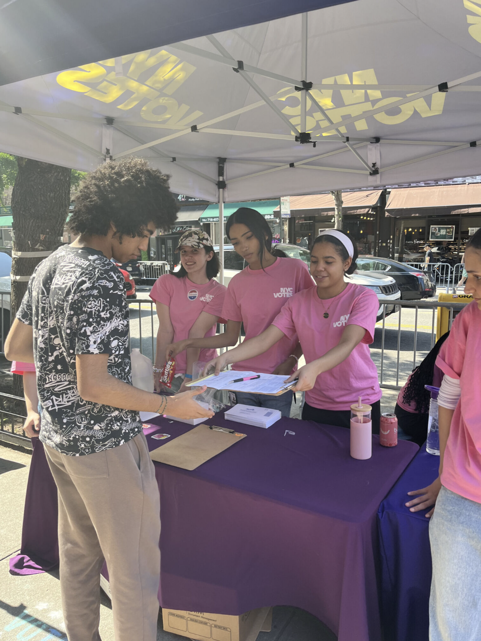
Patisipan yo reyalize pwojè sivik ki peye yo, tankou kanpay nan telefòn ak mesaj tèks, kanpay enskripsyon elektè, ak evènman sansibilizasyon fas-a-fas. Nan lane 2025 sèlman, Jèn Anbasadè yo ak manm Komite Ansyen Elèv yo:
- Te patisipe nan 136 evènman nan Vil New York
- Te planifye epi òganize 58 evènman jèn yo dirije
- Te fè plis pase 218,000 kontak avèk elektè
- Te voye plis pase 219,000 mesaj
- Te enskri 477 nouvo elektè
- Te fè aktivite sansibilizasyon nan uit lang, sa ki te reflete divèsite kominote y ap sèvi yo
Edikasyon Atravè Aksyon
Pou Imtiaz, youn nan premye evènman sansibilizasyon li yo te fèt nan Grand Army Plaza nan Brooklyn.
"Nou te annik mete men n toudwat nan pat la," se sa li deklare. "Gen kèk moun ki te inyore nou." Gen kèk ki te aksepte pale. Okòmansman, li te efreyan — men li fè m pran konfyans.”
Touray sonje menm estrès sa yo pandan premye evènman sansibilizasyon li yo nan Union Square.
“Okòmansman, mwen te timid anpil,” se sa li deklare. “M te fè anpil jefò pou m apwoche moun yo epi mande yo, 'Èske nou enskri pou n vote?'”
Premye evènman sansibilizasyon Aachol te fèt nan kad selebrasyon mach Fyète (masi madi) bò lanmè a.
"Okòmansman, li te yon ti jan estresan pou m al pale ak moun owaza," se sa li deklare. "Men, ofiyamezi jounen an t ap pase, mwen te vin pi alèz." Mwen te di, 'Waw, m ap fè yon bagay ki enpòtan kounye a.'”
Moman refi yo — e menm entèraksyon dezagreyab — te fè pati pwosesis aprantisaj la. Men, toulètwa anbasadè yo di eksperyans sa yo te ranfòse rezilyans yo ak konfyans.
“Lè m te anbasadè bonè konsa, se te youn nan etap enpòtan mwen te bezwen nan lavi a,” se sa Touray deklare. “Sa te vrèman fòse m soti nan zòn konfò mwen pou l ouvè kò m epi pale ak franchiz.”
Avèk tan k ap pase, konvèsasyon yo te vin pi pwofon epi gen plis sans.
Nan yon mach Fyète ki t ap fèt nan Chelsea Piers pandan sik eleksyon primè ane 2025 lan, Touray te rankontre yon Moun New York aje ki se imigran ki pa janm voye yon jou nan lavi l.
“Li te di m li pa janm vote yon jou nan lavi li,” se sa Touray deklare. "Men, li te di eleksyon sa a te sanble enpòtan paske New York se lakay li."
De moun yo te pale anpil sou rezon ki fè eleksyon lokal yo enpòtan ak fason menm yon sèl vòt gen rapò ak demen yon vil yon moun renmen. Konvèsasyon an te ranfòse konviksyon Touray kòmkwa angajman sivik se yon bagay pèsonèl — eksperyans yon moun viv , lafwa, idantite, ak santiman apatenans detèmine.
Pou Aachol, yon sèl entèraksyon li te genyen byen bonè avèk yon elektè ki te kanpe pou poze l kesyon sou pwogram nan te fè yon gwo enpak.
Li te di sa nou t ap fè a te gen yon enpak, sitou pou jèn yo...(epi) anpil moun pèdi espwa sèjousi, kidonk li te ankourajan pou wè jèn yo toujou konte sou sistèm nan pou ede nou.
Nan yon lòt aktivite sansibilizasyon Metropolitan Asian Deaf Association te òganize, Touray te ede bay manm kominote Azyatik ki Soud yo enfòmasyon sou elektè.
"Anvan sa, mwen pa t menm konnen te gen yon kominote Azyatik ki Soud," se sa li deklare. "Nou t ap ede moun yo jwenn enfòmasyon menm jan ak tout lòt moun." Yo pa ta dwe ekate pèsonn akoz yon andikap.”

Jèn Anbasadè 2025 yo ak pèsonèl NYC Votes la ap fè demach nan Mach Fyète Jèn yo.
Jèn yo an Aksyon
Kontrèman ak estaj tradisyonèl yo, aplikasyon Jèn Anbasadè yo konsantre sou refleksyon ak eksperyans moun viv olye de nòt oswa kalifikasyon anvan.
Yon kesyon redaksyon nan aplikasyon an sou patisipasyon kominote a te atire atansyon Imtiaz.
"Alepòk, mwen te fè pati yon pwogram òganizasyon jèn Sid Azyatik yo," se sa li deklare. “Se te premye fwa mwen te vrèman santi mwen konekte ak moun ki te gen menm orijin ak valè avè m.” Lefètke mwen te ekri sou sa te fè m reflechi sou jan kominote ka pwisan.
Pou Aachol, pwogram nan te elaji definisyon li bay pou angajman sivik la.
Mwen te konsidere angajman sivik la tankou lè w ale nan manifestasyon ak rasanbleman. Men lefètke mwen te yon Jèn Anbasadè, sa te aprann mwen li konsène edikasyon tou — dekouvri pwoblèm ki te fè enpak sou nou anvan epi enfòme lòt moun sou yo.
Li di youn nan leson ki pi enpòtan li te aprann se fason pou l fè konvèsasyon. malgre diferans yo.
“Mwen aprann se pwoblèm pou ou pa dakò,” se sa li deklare. “Ou pa oblije aksepte pwendvi yon moun pou fè yon konvèsasyon ki gen sans. Pale apati yon pwendvi endepandan te ede mwen konprann moun yo pi byen.”
Pou Touray, dekouvri pwoblèm lokal yo nan pwòp katye li, Mount Hope nan Bronx, te pote transfòmasyon.
“Lè m te fenk antre, mwen te aprann katye mwen an gen youn nan to patisipasyon elektè ki pi ba nan vil la,” se sa li deklare. "Genyen anpil faktè — aksè nan lang, estati imigrasyon, antesedan.”
Etidye istwa lokal la — tankou enpak alontèm desizyon sou ibanis yo — te ede li konekte angajman sivik ak lavi chak jou li.
M ap viv la a. Mwen reveye epi mwen wè kote sa a chak jou. Mwen vle miyò pou kominote mwen an. E sa vini avèk zafè vote a. Sa vini avèk defans dwa moun.
Atravè pwogram nan, li te aprann li te kapab enskri alavans pou l vote a 16 zan e menm antre nan komisyon kominotè li an antanke yon adolesan — yon bagay li te fè pi devan.
"Nou kòmanse wè chanjman toutbonvre," se sa li deklare. "Sa te fè m reyalize depi mwen vini epi fè pati pa m nan, sa sifi."
Envesti nan Jenerasyon k Ap Vini an
Apre li te fin kòmanse kòm yon Jèn Anbasadè, Imtiaz kounye a se estajyè nan ekip Angajman ak Edikasyon Kominotè nan Komisyon Finansman Kanpay Vil New York, menm biwo ki sipèvize pwogram nan — yon moman kote tout bagay tounen kote yo te kòmanse a.
“Se vrèman byen pou evalye aplikasyon yo,” se sa li deklare. "Sa pa gen lontan depi mwen te nan pozisyon yo."
Jounen jodi a, Aachol se yon manm nan Komite Ansyen Elèv la epi li ankouraje lòt jèn moun yo aplike.
Pa konsidere tèt ou tankou yon moun ki pa kapab toutotan w pa eseye toutbonvre. Se te youn nan pi bèl eksperyans nan lavi mwen. Sa te montre m mwen gen yon wòl pou m jwe antanke yon fonksyonè sivil.
Touray ap trase yon nouvo wout tou. Olye pou l rapousuiv etid li nan medsin, li prevwa espesyalize li nan syans politik ak politik piblik.
“Si m pa t janm antre nan pwogram nan, mwen petèt t ap toujou pa satisfè, m t ap panse m vle ale nan medsin,” se sa li deklare. “[Li] chanje lavi m.”
Toulètwa anbasadè yo souliyen pou di pwogram nan se pa sèlman kantite enskripsyon elektè ki fèt — se relasyon, konfyans, ak kwasans.
“Mwen te rankontre kèk nan pi bon zanmi mwen yo atravè pwogram sa a,” deklarasyon Touray. “Se pa sèlman travay la. Se moun yo.”
Konsèy li bay jèn moun ki panse pou aplike yo?
“Fè sa san pèdi tan,” se sa li deklare. "Ou pa gen anyen pou pèdi lè w tante yon bagay nèf." Se petèt pi bon bagay ki pa janm rive mwen.”
Lè NYC Votes envesti nan lidèchip kay jèn yo, li bati yon jenerasyon ki non sèlman konprann demokrasi — men ki patisipe ak tout nanm yo nan enfliyanse li.